nstd
Node.js, without Node.js.
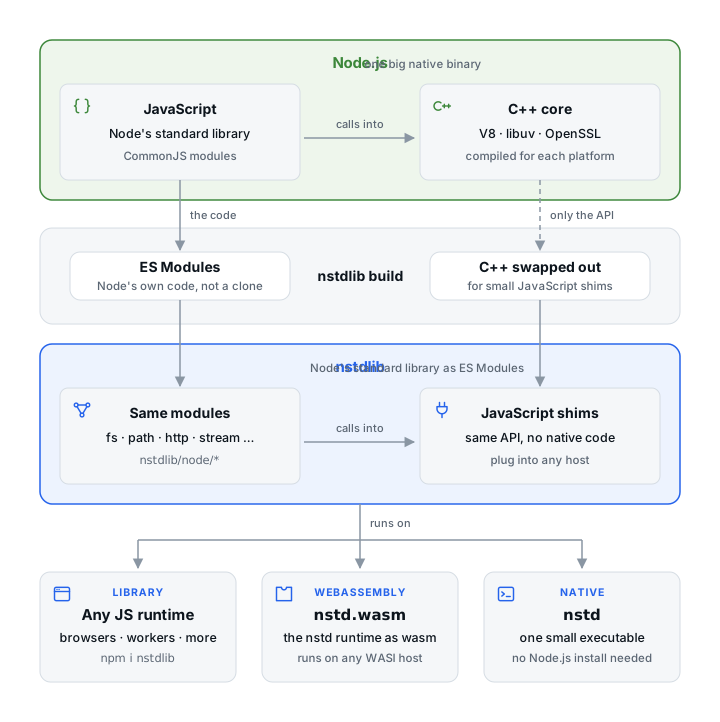
One standard library, two ways to use it
Run with nstd
A single executable combining QuickJS-NG, a Zig host, and nstdlib compiled to bytecode. Ship the runtime with your script instead of requiring a Node.js installation.
Import from nstdlib
Use familiar modules such as path, events, stream, and url as ordinary ES modules in bundlers, workers, browsers, and other JavaScript runtimes.
Built from Node.js
This is not a clean-room reimplementation. The pipeline rewrites Node.js's own lib/*.js from a pinned release into runtime-agnostic modules.
Bring your own host
Pure JavaScript works anywhere. Filesystems, sockets, TLS, and other platform capabilities connect through explicit host seams—the same mechanism nstd uses.
Measured compatibility
Generated API reports measure every module in the standalone runtime and in a real browser page, against Node.js's own exports and its own test suite.
Honest failure modes
Missing platform capabilities throw an error that names the unavailable binding instead of returning undefined and allowing an incorrect result to travel.